
DANCE | PHYSIOTHERAPY, Exercise Physiology & ASSESSMENTS
QSMC provides dance physiotherapy from our Woolloongabba clinic. Rebecca von Pfyffer leads our dance physiotherapy service. We treat dancers of all styles and levels, from recreational students through to pre-professional and professional performers.
Trusted Support for Dancers at Every Level
Dancers are performing athletes, and the demands placed on the body are unique. Whether you are managing an injury, preparing for pointe, applying for a tertiary dance program or looking to perform at your best, our team provides individualised, evidence-based care tailored to dance. Our aim is to get you back in the studio and on stage as soon as possible, so you can keep doing what you love.
We work with dancers of all ages and abilities, across ballet, contemporary, jazz, musical theatre, ballroom, latin and more.
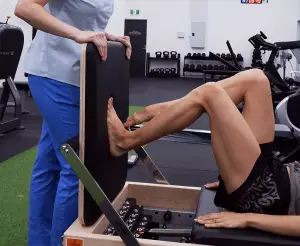
How We Support Dancers
Injury Assessment and Rehabilitation
While some injuries come on suddenly and are acute, most dance injuries are overuse injuries, commonly occurring in the hip, knee, foot and ankle. Because of the volume and repetitive nature of dance training, small niggles can develop into longer-term problems such as stress-related or chronic injuries.
We assess and manage a wide range of dance-related injuries, including:
- Posterior ankle pain and impingement
- Stress reactions and fractures of the foot, tibia (shin splints) and lower spine
- Ankle sprains
- Snapping hip syndrome and anterior hip pain
- Tendon, muscle and joint pain related to training load
Your physiotherapist will perform an individualised assessment exploring important factors such as how you move, your training load and dance footwear to work out where the problem is coming from. Contributing factors can include joint stiffness or hypermobility, strength, a change in training, foot posture, stance posture or muscle imbalance. Your rehabilitation plan is tailored to your injury, your goals and your performance schedule.
Return to Dance Planning
Returning to dance requires more than being pain free. Very few injuries need complete rest from dancing, so wherever possible we aim to keep you training in some form while your injury recovers.
We guide you through a structured process that may include:
- Strength and control benchmarks
- Functional, dance-specific testing
- Load management and graded return to class, rehearsal and performance
- Advice on technique, footwear and training changes where relevant
Injury Prevention and Performance
Once you have recovered from an injury it is important to ensure that you maintain good strength and mobility so that it doesn’t recur. Furthermore, if you are not injured but want to reduce your injury risk or enhance your performance, we can help with:
- Movement and biomechanical assessment
- Strength and conditioning for dance
- Clinical Pilates for strength, mobility and movement control
- Load management strategies
- Regular monitoring through the year
If a pain or niggle lasts more than a week, come and see us sooner rather than later. Early intervention gives you the best chance of avoiding a longer time out of the studio, and it often benefits performance too.
Our Dance Assessments
We offer a full range of assessments for dancers. Each is a 1 hour appointment.
Pre-Pointe Assessment
The transition to training en pointe is an exciting yet physically demanding time in a young dancer’s development. Dancing on pointe shoes involves 12 times body weight through the feet which is a big leap from simply wearing ballet flats and significantly increases the risk of injury. A pre-pointe assessment evaluates whether a dancer is ready to start training and performing en pointe. Readiness depends on many factors, including age, growth, training history, ankle mobility, foot and ankle control, intrinsic foot and calf strength, pelvic and trunk control, balance and ballet technique.
The assessment includes:
- Postural assessment
- Functional assessment specific to ballet
- Foot and ankle strength and mobility
- Lower limb strength and trunk control with movement
- Turn out control and strength
Most dancers will then follow an individualised home exercise program and receive education on their health and wellbeing, designed to improve their readiness and preparation for dancing on pointe.
When should I book? We recommend booking 2 to 3 months before commencing pre-pointe training, so there is time to work on any areas identified.
Tertiary Dance Assessment / Risk Profile Assessment
A formal Tertiary Dance Council Assessment is a prerequisite for many Australian and overseas dance schools, including QUT, the New Zealand School of Dance, the Victorian College of the Arts and WAAPA. It may also be required for contracts that include a pre-employment assessment, and it is useful for anyone about to move into full-time training or take their dance more seriously.
The form is usually completed and included with your application. The assessment looks at current and previous injuries and includes a clinical assessment of strength, posture, trunk control, muscle function and flexibility, to evaluate readiness for a full-time dance schedule.
Dance Performance Assessment with VALD Technology
A Dance Performance Assessment using VALD technology gives detailed, objective insight into your performance, potential injury risk and rehabilitation progress.
VALD technology is trusted by over 850 of the world’s most elite sporting teams, universities and defence departments. The Royal Ballet School also uses the same technology to regularly test its students, track neuromuscular strength and guide injury rehabilitation.
During your assessment we use VALD to:
- Measure strength in all major muscle groups
- Calculate the power your muscles produce during jumping actions
- Identify areas of weakness or imbalance
- Analyse possible injury risk factors, such as differences in strength, range and power
Results are available in real time, so you receive detailed feedback during your appointment.
Ongoing Dancer Monitoring
Our Ongoing Dancer Monitoring service involves physical and strength testing at set points through the year to track your progress. It is also a chance to check in with your physiotherapist and plan the periodisation of your training and development.
Our Dance Assessments
We offer a full range of assessments for dancers. Each is a 1 hour appointment.
Pre-Pointe Assessment
The transition to training en pointe is an exciting yet physically demanding time in a young dancer's development. Dancing on pointe shoes involves 12 times body weight through the feet, a big leap from ballet flats, and it significantly increases the risk of injury. A pre-pointe assessment evaluates whether a dancer is ready to start training and performing en pointe. Readiness depends on many factors, including age, growth, training history, ankle mobility, foot and ankle control, intrinsic foot and calf strength, pelvic and trunk control, balance and ballet technique.
Most dancers will then follow an individualised home exercise program and receive education on their health and wellbeing, designed to improve their readiness and preparation for dancing on pointe.
The assessment includes
- Postural assessment
- Functional assessment specific to ballet
- Foot and ankle strength and mobility
- Lower limb strength and trunk control with movement
- Turn out control and strength
When should I book?
We recommend booking 2 to 3 months before commencing pre-pointe training, so there is time to work on any areas identified.
Tertiary Dance Assessment / Risk Profile Assessment
A formal Tertiary Dance Council Assessment is a prerequisite for many Australian and overseas dance schools, including QUT, the New Zealand School of Dance, the Victorian College of the Arts and WAAPA. It may also be required for contracts that include a pre-employment assessment, and it is useful for anyone about to move into full-time training or take their dance more seriously.
The form is usually completed and included with your application. The assessment looks at current and previous injuries and includes a clinical assessment to evaluate readiness for a full-time dance schedule.
The assessment looks at
- Current and previous injuries
- Strength
- Posture and trunk control
- Muscle function
- Flexibility
Dance Performance Assessment with VALD Technology
A Dance Performance Assessment using VALD technology gives detailed, objective insight into your performance, potential injury risk and rehabilitation progress.
VALD technology is trusted by over 850 of the world's most elite sporting teams, universities and defence departments. The Royal Ballet School also uses the same technology to regularly test its students, track neuromuscular strength and guide injury rehabilitation. Results are available in real time, so you receive detailed feedback during your appointment.
During your assessment we use VALD to
- Measure strength in all major muscle groups
- Calculate the power your muscles produce during jumping actions
- Identify areas of weakness or imbalance
- Analyse possible injury risk factors, such as differences in strength, range and power
Ongoing Dancer Monitoring
Our Ongoing Dancer Monitoring service involves physical and strength testing at set points through the year to track your progress. It is also a chance to check in with your physiotherapist and plan the periodisation of your training and development.
Through the year
- Physical and strength testing at set points
- Progress tracking
- Check-ins with your physiotherapist
- Planning the periodisation of your training
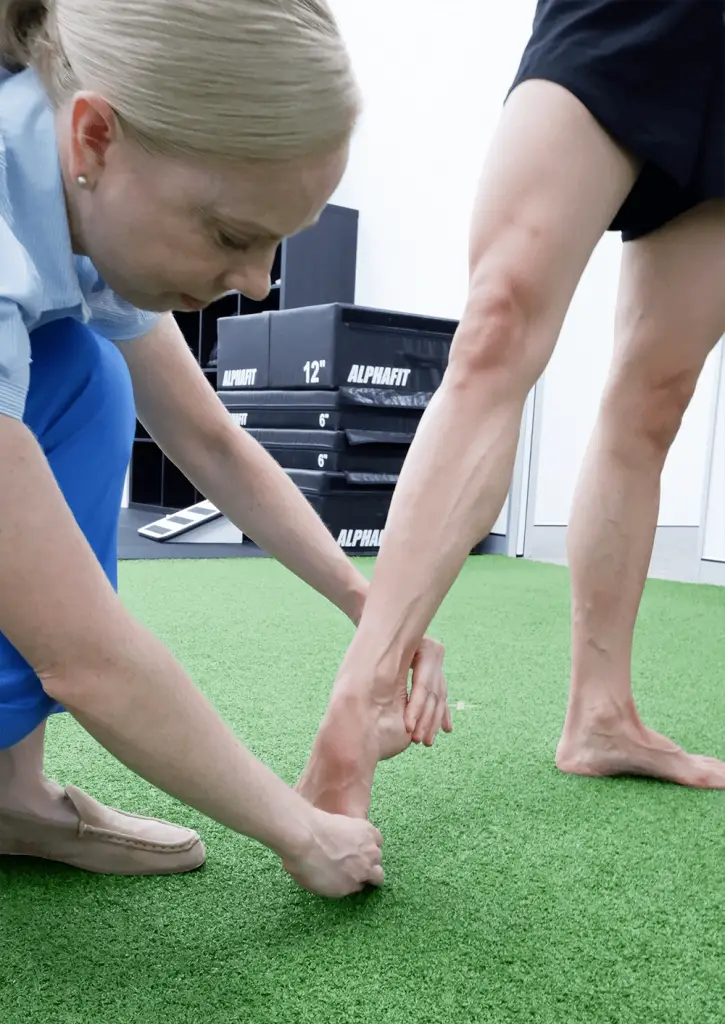
Common Dance Injuries We Manage
- Posterior ankle pain and impingement
- Foot, tibia (shin splints) and lower spine stress reactions and fractures
- Ankle sprains
- Snapping hip syndrome
- Anterior hip pain
- Low back pain
- Tendon pain
- Muscle strains
- Patella dislocation
Why Choose QSMC?
Our approach focuses on structured, evidence-based care tailored to the demands of dance.
- Physiotherapists with backgrounds in dance and performing arts
- Experience with dancers, performing artists and elite athletes, from recreational to professional level
- Individualised management plans based on current clinical evidence
- Objective, data-driven assessment with VALD technology
- Clinical Pilates and gym-based rehabilitation options
- Collaborative, multidisciplinary care across physiotherapy, exercise physiology and other allied health
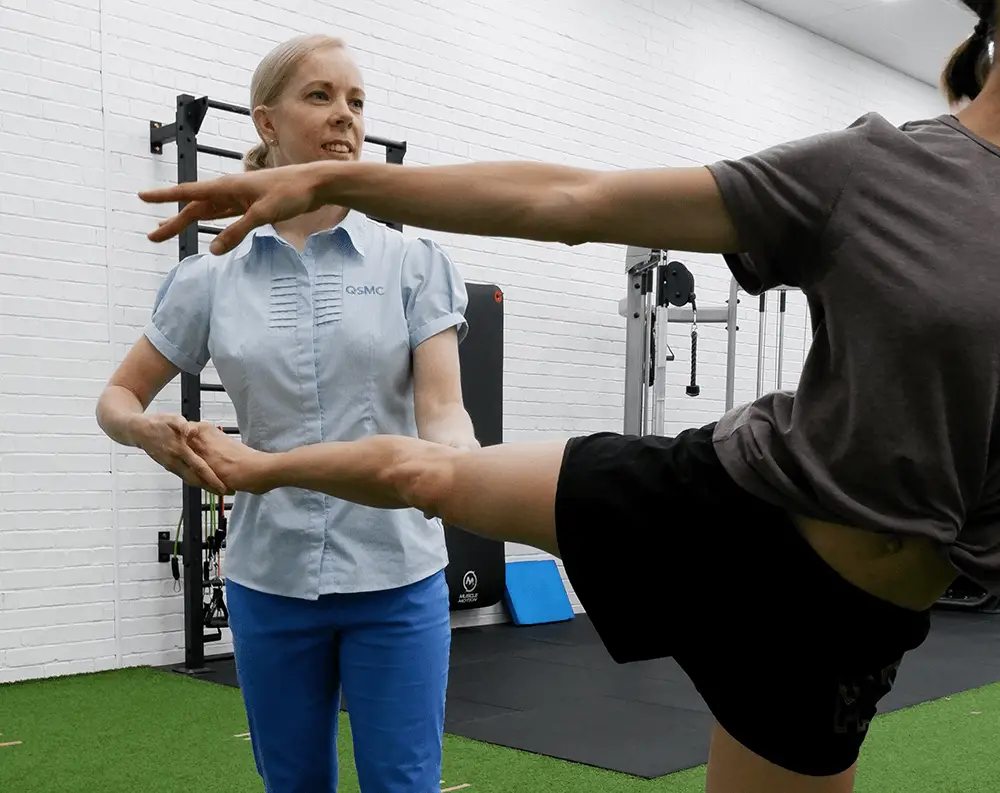
Book with our Brisbane-based Dance clinicians
Take the next step with a physiotherapist who understands the demands of dance. Both our dance specific physiotherapists treat from our Woolloongabba clinic.
Physiotherapists

Musculoskeletal Physiotherapist
Rebecca von Pfyffer is a Titled Musculoskeletal Physiotherapist and former dancer, and leads dance physiotherapy at QSMC. She holds a Diploma in Dance and has over 20 years of Clinical Pilates training. Her dance and performing arts practice covers injury management, injury prevention, pre-pointe assessments and tertiary assessments. Rebecca has also worked at the high-performance level of sport, providing physiotherapy coverage for Freestyle Ski Canada and Diving Australia at international competitions, and working with QLD Cup Football. She is an Associate Lecturer at the University of Queensland and a committee member of the Queensland Musculoskeletal Branch of the Australian Physiotherapy Association.

Senior Physiotherapist
Mardi Watson is a Senior Physiotherapist who has been with QSMC since 2008. A former elite artistic gymnast and coach with more than 20 years in the sport, she has a special interest in gymnastics, dance and acrobatics, as well as low back and neck injuries. Mardi has completed Clinical Pilates training and works with clients in early to mid stage rehabilitation.
Exercise Physiologists

Exercise Physiologist
Alannah Mathews is an Accredited Exercise Physiologist and former Tokyo 2020 Olympian in Rhythmic Gymnastics who brings high-performance exercise physiology experience to the QSMC team. She leads our Exercise Physiology dance services and VALD performance assessments at QSMC. Alannah has a strong clinical focus on strength and conditioning frameworks for aesthetic and performance athletes across gymnastics, dance, ballet, acrobatics, and circus arts. Her clinical practice encompasses musculoskeletal rehabilitation, load management, VALD strength analysis, pre- and post-surgical exercise care, and healthy ageing programs.
Serving dancers across Brisbane and South East Queensland – book with a clinician who understands your needs.
If you are unsure which clinician is best suited to your needs, our reception team can assist in directing you to the most appropriate practitioner.
Frequently Asked Questions
What should I wear?
Please wear comfortable attire, ideally your dance gear, so your feet are visible and we can see how you move.
Can I see a dance physiotherapist if I'm not a serious or full-time dance student?
Yes, of course. Whether you dance for fun, for exercise or to pursue a career, we cater to all your dance-related needs. We want you to enjoy a lifetime of dance.
When should I have my pre-pointe assessment?
We generally recommend booking 2 to 3 months before commencing pre-pointe training. This allows enough time to work on any areas identified.
Do I need a referral to see a physiotherapist or exercise physiologist at QSMC?
No referral is required to book an appointment with a physiotherapist or exercise physiologist at our Brisbane clinics. You can book directly online or contact our reception team on 07 3891 2000.
How long are the assessment appointments?
Pre-Pointe, Tertiary Dance and Dance Performance Assessments are each 1 hour.
Visit QSMC in Brisbane
QSMC has two Brisbane clinics offering dance physiotherapy and exercise physiology services – Bowen Hills and Woolloongabba.
Bowen Hills Clinic
Bowen Hills Medical Specialist Centre
Suite 2/16 Thompson St, Bowen Hills QLD 4006
Woolloongabba Clinic
The Gabba, Hyundai Centre
Gate 2, 812 Stanley St, Woolloongabba, QLD 4102.
When Can I Return to Sports After an ACL Injury?
Sit down with one of our Physiotherapist’s, our very own, Rob Godbolt. He has an extensive understanding and experience providing expert pre and post-operative treatment for ACL injuries. His knowledge of return to sport protocols and programs is second to none having worked with many elite sporting teams such as being the State of Origin Queensland Maroons Physiotherapist for many years. We chatted with him and picked his brain about all things ACL.